

Planning a trip to the UAE? Along with preparing your passport, GCC residence permit, UAE visit visa, and travel documents, it is equally important to understand the UAE customs rules before you pack your luggage.
Many travelers assume customs checks only apply to commercial goods, but that’s not the case. Personal luggage is also subject to customs regulations, and carrying prohibited or restricted items can lead to confiscation, fines, delays, or even legal action.
This guide explains what you can and cannot bring into the UAE, the applicable customs allowances, and important rules GCC travelers should know before their journey.
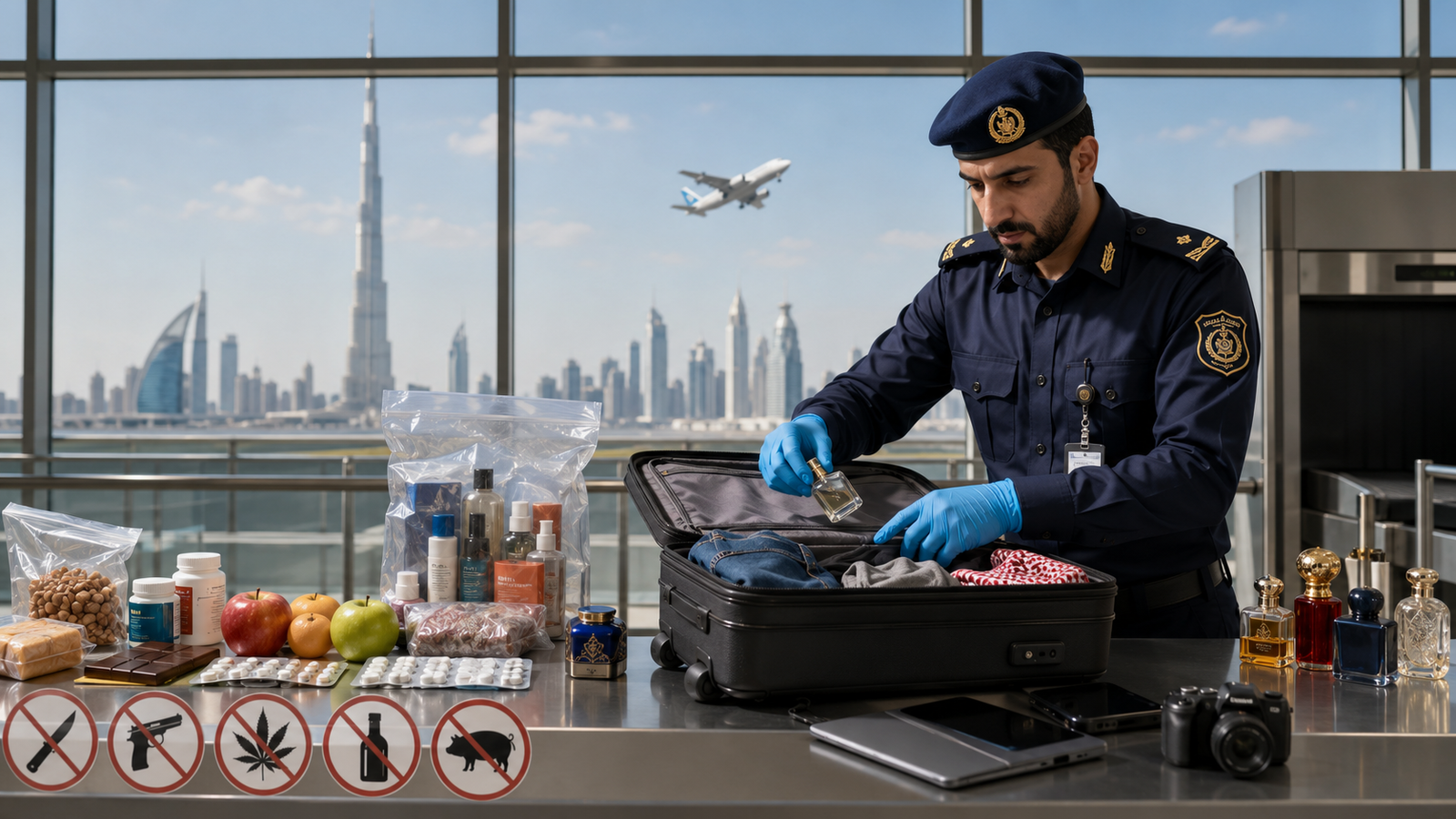
Why You Should Know UAE Customs Rules Before You Travel
The UAE has customs regulations that help protect public health, national security, the environment, and local laws. These rules apply to everyone entering the country, regardless of the purpose or length of their visit.
Taking a few minutes to review the regulations before your trip can help you:
- Avoid delays during customs inspections.
- Prevent the confiscation of restricted or prohibited items.
- Reduce the risk of fines or penalties.
- Complete airport clearance more efficiently.
- Start your trip with greater confidence.
Preparing before you travel is one of the easiest ways to avoid unexpected issues after you arrive.
Planning your UAE trip? Check our complete UAE Visit Visa Guide for GCC residents before applying.
How UAE Customs Rules Work
When you arrive in the UAE, customs officers may inspect your luggage to ensure it complies with the country’s import regulations. Every item you carry generally falls into one of the following categories:
| Category | What It Means |
| Permitted | Items you can bring into the UAE for personal use without special approval. |
| Restricted | Items that require permits, declarations, or supporting documents before they can enter the country. |
| Prohibited | Not allowed into the UAE and may lead to legal consequences. |
Knowing these categories before you travel makes packing much easier and helps you avoid carrying items that could cause problems at customs.
Don’t let missing documents delay your journey. Learn whether UAE immigration prefers digital copies, physical documents, or both.
UAE Customs Duty-Free Allowances for Travelers
The UAE allows travelers to bring certain personal goods into the country without paying customs duty, provided they stay within the permitted limits.
Duty-free allowances generally apply to:
- Personal clothing and belongings
- Personal gifts within the allowed value
- Limited quantities of tobacco products
- Limited quantities of alcoholic beverages where permitted
If you are carrying goods that exceed the duty-free allowance or appear to be intended for commercial use, customs duties or additional documentation may be required.
The exact allowances can change depending on UAE regulations and the type of goods being carried, so travelers should check the latest requirements before departure.
Permitted Items You Can Bring Into the UAE
Most personal belongings are allowed when they are intended solely for your own use during your stay.
Clothing and Personal Accessories
You can bring everyday clothing, shoes, handbags, watches, and other personal accessories without any restrictions, provided they are in reasonable quantities.
Personal Electronics
Travellers can usually carry personal electronic devices such as:
- Mobile phones
- Laptops
- Tablets
- Cameras
- Smartwatches
- Headphones
- Chargers and cables
If you are carrying several new electronic devices in unopened packaging, customs officers may ask whether they are intended for personal use or resale.
Personal Care Products
Toiletries and cosmetics are generally permitted, including:
- Shampoo
- Soap
- Perfume
- Skincare products
- Makeup
- Hair care products
These should be packed in accordance with your airline’s baggage and liquid restrictions.
Jewellery and Personal Valuables
Personal jewellery such as rings, necklaces, bracelets, and watches can normally be brought into the UAE for personal use.
If you are carrying high-value jewellery in large quantities, customs officials may ask for additional information or documentation.
Baby Essentials
Travellers with children may bring baby supplies, including:
- Infant formula
- Baby food
- Diapers
- Feeding bottles
- Baby care products
These items are generally accepted when carried in reasonable amounts.
Restricted Items That May Require Approval
Some goods are allowed only if certain conditions are met. Travellers should always check the latest requirements before departure.
Prescription Medicines
Many prescription medicines can be brought into the UAE for personal treatment. However, medicines containing controlled substances may require prior approval or supporting medical documentation.
To avoid delays:
- Carry medicines in their original packaging.
- Keep a valid doctor’s prescription.
- Bring only the quantity required for your trip.
- Carry any supporting medical documents if applicable.
Checking your medication before travelling is one of the most important steps when preparing for your journey.
Pets
Travelling with pets involves additional requirements.
Depending on the animal, you may need:
- An import permit
- Vaccination records
- A veterinary health certificate
- Microchip identification
Meeting these requirements helps protect animal and public health.
Drones
Personal drones are regulated in the UAE. Depending on where and how you intend to use the drone, registration or approval may be required before arrival. Travellers should verify the applicable rules before including a drone in their luggage.
Plants and Seeds
Plants, seeds, soil, and some agricultural products may require inspection or official approval before entering the UAE. These measures help prevent pests and plant diseases from entering the country.
Medical Equipment
Specialised medical devices for personal use are generally permitted, although customs officers may request supporting documentation depending on the equipment being carried.
Related Articles:
How Long Does UAE Visa Approval Take?
When Should You Choose a 60-Day Multiple-Entry UAE Visa?
Is It Safe to Travel to the UAE Just Before Your Visa Expires?
Prohibited Items You Cannot Bring Into the UAE
Certain goods are not allowed to enter the UAE under customs regulations. Carrying these items may result in confiscation, penalties, or legal action depending on the nature of the item.
Illegal Drugs
The UAE has strict anti-drug laws and maintains a zero-tolerance approach to illegal narcotics and recreational drugs.
Travellers should also ensure that any prescribed medication complies with UAE regulations before travelling.
Counterfeit Goods and Forged Currency
Counterfeit branded products, forged or counterfeit currency, pirated software, and copied media are prohibited. Bringing or attempting to use counterfeit items may result in confiscation and legal action.
Weapons and Ammunition
Firearms, ammunition, explosives, and similar weapons cannot be imported without official government authorisation.
This restriction also applies to many items designed primarily for self-defence.
Fireworks and Explosives
Fireworks and explosive materials are prohibited unless specifically authorised by the relevant authorities.
Pornographic Material and Offensive Material
Printed materials, videos, photographs, or digital content that violate UAE laws relating to public morality may not be permitted. Content that promotes hatred, violence, or extremism may also be restricted. Electronic devices may be inspected when required by customs authorities.
Products Made From Endangered Wildlife
Products made from protected animals or endangered species may be prohibited under UAE regulations and international conservation agreements.
Examples include:
- Ivory products
- Certain animal skins
- Other wildlife-derived items from protected species
Bringing Food Into the UAE
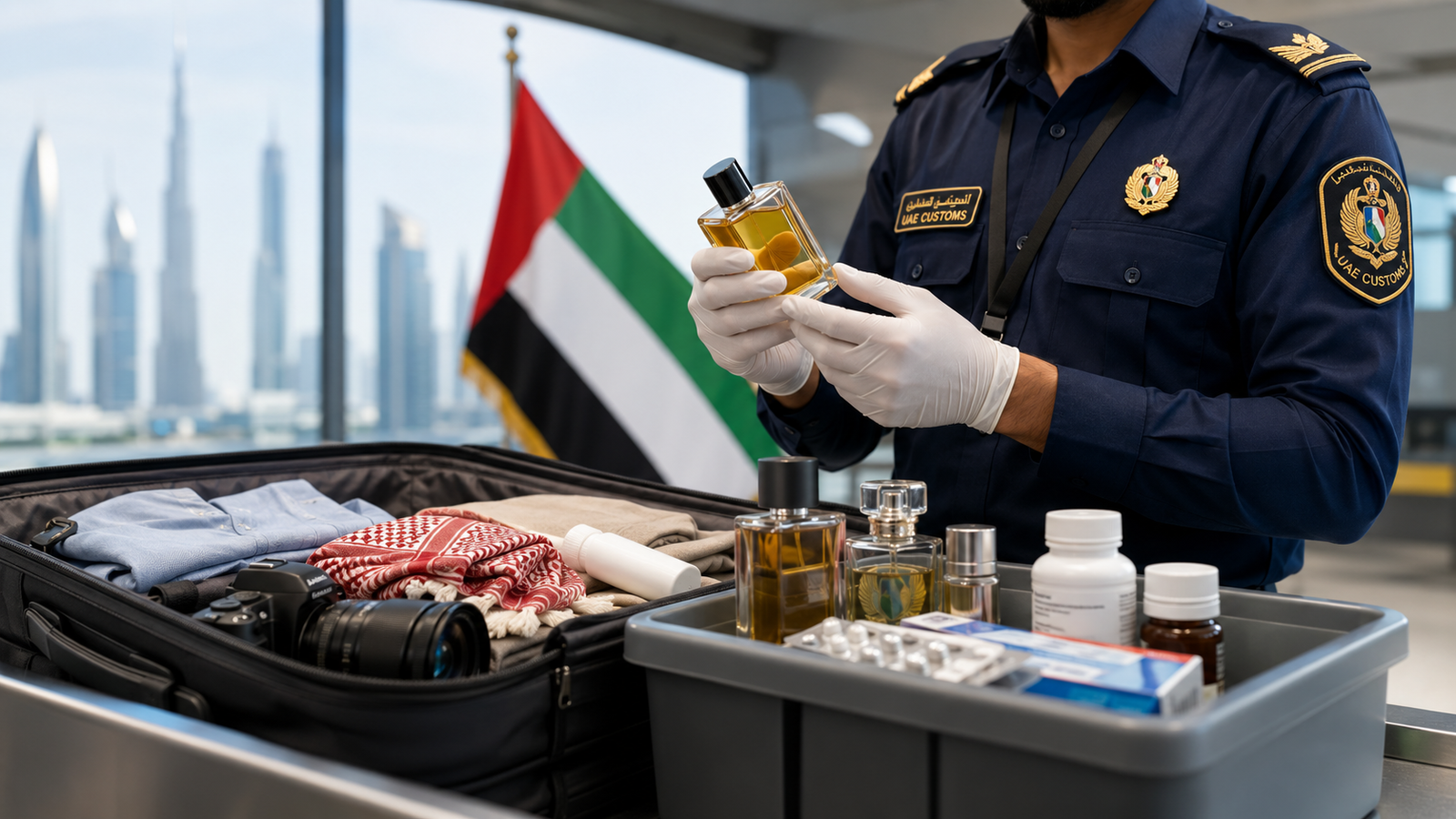
Many packaged food products can be brought into the UAE for personal consumption. However, certain food items may be subject to inspection or additional requirements depending on their type and origin.
Common food items that travelers usually carry include:
- Chocolates
- Biscuits
- Tea and coffee
- Packaged snacks
- Infant food
- Canned food
Fresh food products, including meat, dairy products, fruits, vegetables, and certain agricultural items, may be subject to additional restrictions due to health and safety regulations.
Note: Some homemade or cooked food items may be subject to restrictions depending on their ingredients, quantity, and applicable health regulations. If you plan to carry such items, check the latest UAE customs requirements before traveling.
Bringing Cash Into the UAE
Travellers are allowed to carry cash into the UAE. However, anyone carrying cash or negotiable financial instruments above the declaration threshold must declare them to customs upon arrival or departure.
If you plan to travel with a significant amount of money, review the declaration requirements before your journey.
Apply for Your UAE Visit Visa with SmartGo E-Visa
Before thinking about customs, you first need the right visa to enter the UAE.
At SmartGo E-visa, we help eligible GCC residents apply for their UAE tourist visa through a fully online process.
When you apply with us, you can benefit from:
- Simple online visa application
- Secure document upload
- Convenient application tracking
- Assistance throughout the application process
Once your visa is approved, preparing for customs becomes much easier because you can focus on packing only the items that comply with UAE regulations.
Are you a GCC resident planning a UAE trip? Start your UAE visa application with SmartGo E-visa and get professional assistance throughout the process.